
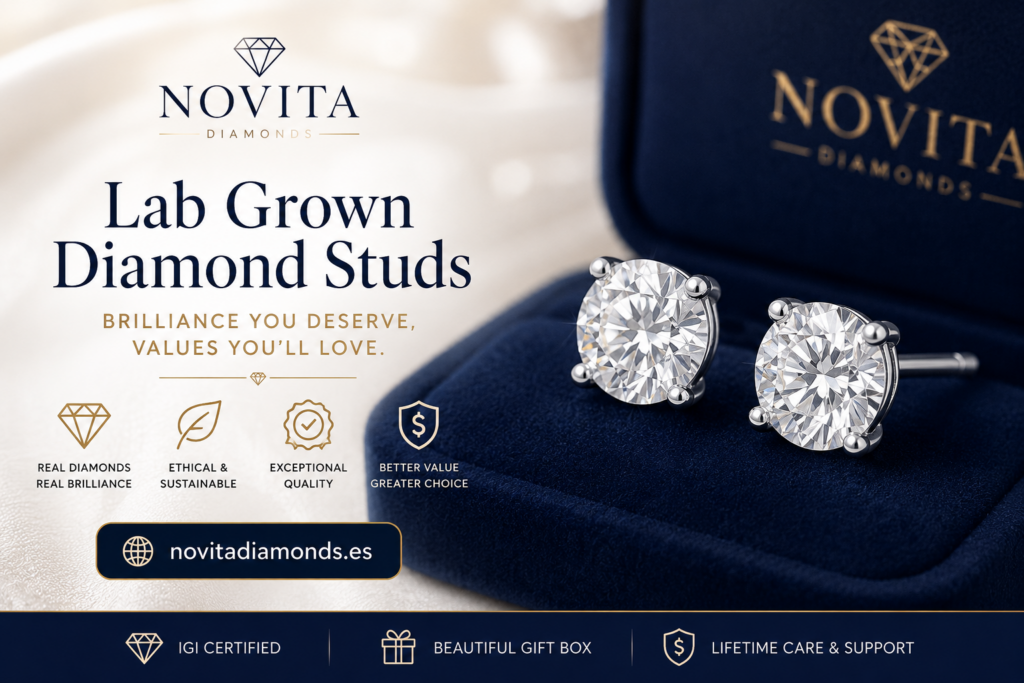
Understanding Man Made Diamonds
Diamonds no longer come only from mines. Modern technology can now lab grown diamond studs laboratory environments. These stones are known as man made diamonds. They have changed how many people shop for fine jewelry because they offer another way to own a real diamond. A diamond created in a laboratory has the same crystal structure as a diamond formed underground. It is not a fake stone and it is not a diamond substitute. It is a genuine diamond that develops through advanced scientific processes. For many buyers the main question is simple. If two diamonds look the same and perform the same way then what makes them different? The answer often comes down to origin cost and personal preference.
How Diamonds Are Created in a Laboratory
Scientists use specialized equipment to recreate the conditions that help diamonds grow. Two methods dominate the industry.
- High Pressure High Temperature (HPHT)
- Chemical Vapor Deposition (CVD)
HPHT uses extreme pressure and heat to form a diamond crystal. CVD begins with a small diamond seed. Carbon-rich gases help the crystal grow layer by layer. Both methods produce real diamonds. After growth the stones are cut polished and graded much like mined diamonds.
What Makes Them Real Diamonds
Many buyers assume laboratory-created stones are imitation products. This misunderstanding often causes confusion. A real diamond is defined by its atomic structure and physical properties. Laboratory-grown diamonds match natural diamonds in hardness brilliance and durability. Professional gem laboratories can identify the origin of a diamond using specialized equipment. However most people cannot tell the difference through normal viewing. Example: A one-carat laboratory-grown diamond ring and a one-carat mined diamond ring may appear identical when worn.
Comparing Cost and Value
Price is one of the biggest reasons buyers explore man made diamonds options. Because laboratory production avoids mining operations these diamonds often cost less than comparable mined stones. This allows you to choose larger sizes or higher quality grades within your budget. For example you may have enough budget for:
- A larger center stone
- Better clarity
- Higher color grade
- A more detailed setting design
Cost savings do not automatically mean better value for every buyer. Value depends on your goals. Some people focus on appearance and budget while others prioritize rarity and geological origin.
Understanding the Four Quality Factors
Whether a diamond comes from a mine or a laboratory the same quality standards apply.
Cut
Cut affects sparkle more than any other factor. A well-cut diamond reflects light efficiently and creates brightness.
Color
Diamonds are graded on a color scale. Stones with less visible color generally receive higher grades.
Clarity
Clarity measures internal and external characteristics. Fewer visible imperfections usually increase value.
Carat Weight
Carat refers to weight rather than size. Larger diamonds often become more expensive as carat weight increases. When comparing diamonds start with cut quality. A well-cut stone often appears more attractive than a larger stone with a weaker cut.
Popular Jewelry Choices
Diamonds appear in many jewelry styles. Buyers often choose them for pieces worn regularly. Common options include:
- Engagement rings
- Wedding bands
- Tennis bracelets
- Pendant necklaces
- Stud earrings
Simple designs often highlight the stone itself. More detailed settings add visual interest and personal style. Your lifestyle can help guide the right choice. Someone with an active routine may prefer secure settings and durable designs.
How to Shop with Confidence
Buying a diamond can feel overwhelming when you face multiple grades and specifications. Start by setting a clear budget. Then decide which factors matter most to you. Some buyers want maximum size. Others focus on color or clarity. Ask for grading reports from respected gemological laboratories. Independent grading provides an objective assessment of quality. Review high-resolution images when shopping online. Examine the diamond closely before making a decision. Questions worth asking include:
- What grading laboratory evaluated the stone?
- What cut grade does it have?
- What return policy is available?
- Does the jewelry include a warranty?
Clear answers help you make informed decisions.
Durability for Daily Wear
Diamonds rank among the hardest materials used in jewelry. This makes them suitable for everyday use when properly cared for. Rings earrings and necklaces can maintain their appearance for many years. Regular cleaning helps preserve sparkle. Warm water mild soap and a soft brush often remove buildup that dulls the surface. Professional inspections can also help identify loose settings before they become larger problems.
Environmental and Production Considerations
Many buyers want to understand how a product is made before purchasing it. Laboratory diamond production follows a different path than traditional mining. The production process takes place in controlled facilities where conditions are monitored throughout growth. Some consumers prefer this approach because they want greater transparency about how their diamonds are produced. Others continue to prefer natural diamonds because they value their geological history and rarity. Neither choice fits every buyer. The right decision depends on what matters most to you.
Common Myths About Laboratory-Created Diamonds
Several misconceptions continue to circulate. Myth: They are fake diamonds. Reality: They are real diamonds with the same crystal structure. Myth: They look different. Reality: Most people cannot distinguish them without specialized equipment. Myth: They wear out faster. Reality: Their durability matches that of natural diamonds. Understanding these facts helps you evaluate options based on evidence rather than assumptions.
Making the Right Choice for Your Needs
Choosing between natural and man made diamonds starts with your priorities. If you want a larger diamond within a specific budget you may find laboratory-created options attractive. If rarity and natural origin matter most you may prefer a mined diamond. Focus on quality first. Review grading reports carefully. Compare multiple stones before buying. Consider how the jewelry will fit your daily life. A thoughtful purchase begins with clear goals. When you understand your priorities you can select a diamond that delivers the appearance quality and value that matter most to you.
Frequently Asked Questions
Are man made diamonds real diamonds?
Yes. They have the same chemical composition and crystal structure as mined diamonds.
Can jewelers tell the difference between natural and laboratory-grown diamonds?
Professional jewelers can identify origin using specialized equipment and testing methods.
Do laboratory-grown diamonds last as long as mined diamonds?
Yes. They offer the same durability and can last for generations with proper care.
